

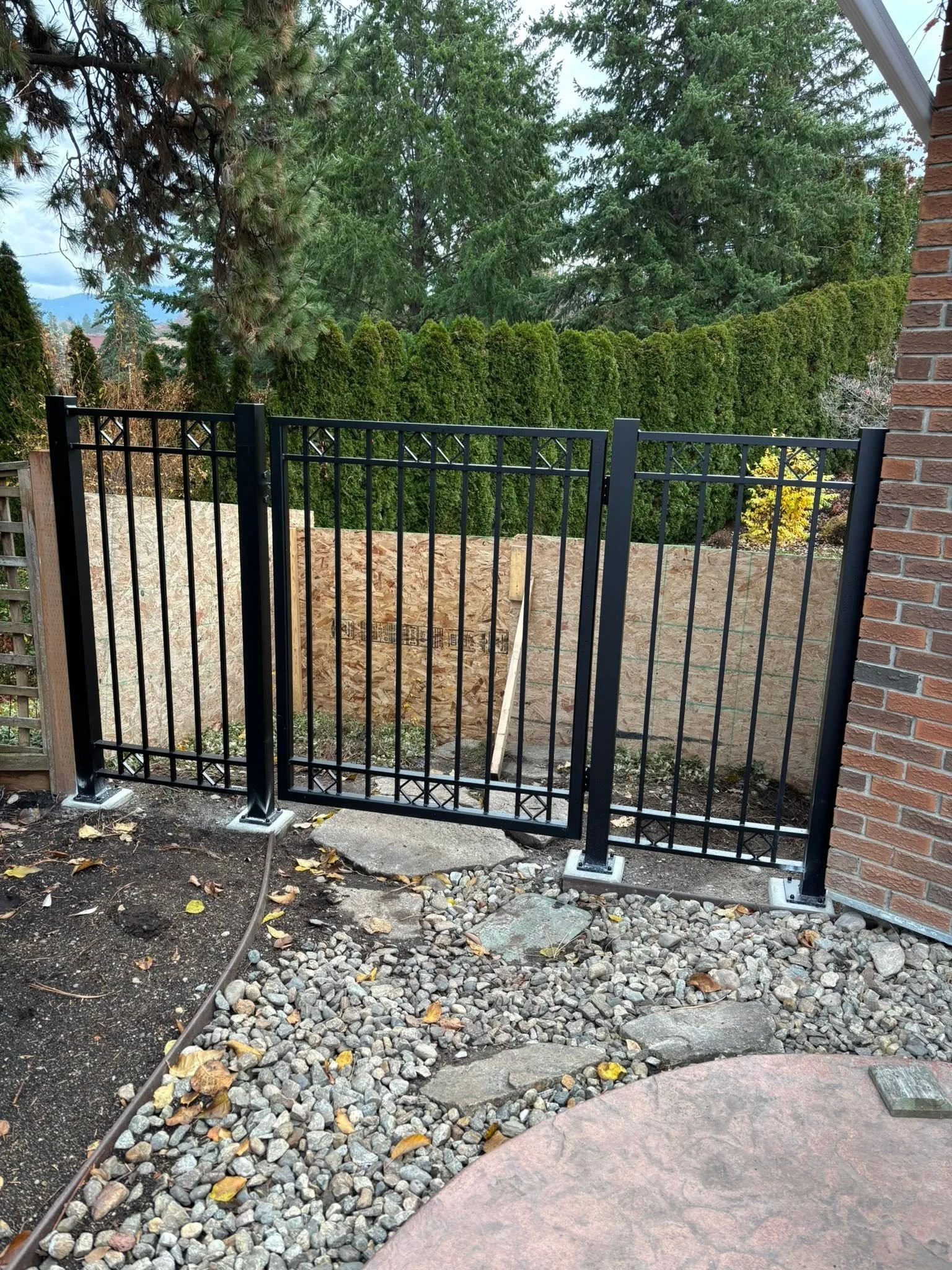
Right now the ground in Kelowna is still soft enough to work. Give it a another month and that changes fast. Once the frost sets in, digging a proper post hole stops being a weekend job and starts being a real problem.
That matters because a custom gate or fence isn't a same-day install. There's shop time to cut, weld and finish the panels. There's ground time to set the posts and pour the footings. Both clocks are running right now. The ground clock runs out first.
Why the Footing Has to Go In Before the Freeze
A gate or fence panel is only as good as what it's anchored to. We build the frame to handle Okanagan weather: steel or aluminum, finished properly, welded right. None of that holds up if the post underneath isn't set correctly.
In Kelowna that means digging below the frost line. The City of Kelowna's own building bulletins call for a minimum of 24 inches of depth below grade for frost protection on footings. That's not an arbitrary number. It's how deep the frost typically reaches into the ground in a normal winter, and anything shallower gets pushed around by freeze-thaw cycling year after year no matter how well the gate itself is built.
Digging 24 inches into soft fall soil is straightforward with a hand auger or post hole digger. Digging 24 inches into ground that's already frozen solid is a different job. At that point you're looking at mechanical breakers, heated ground blankets, or just waiting until spring.
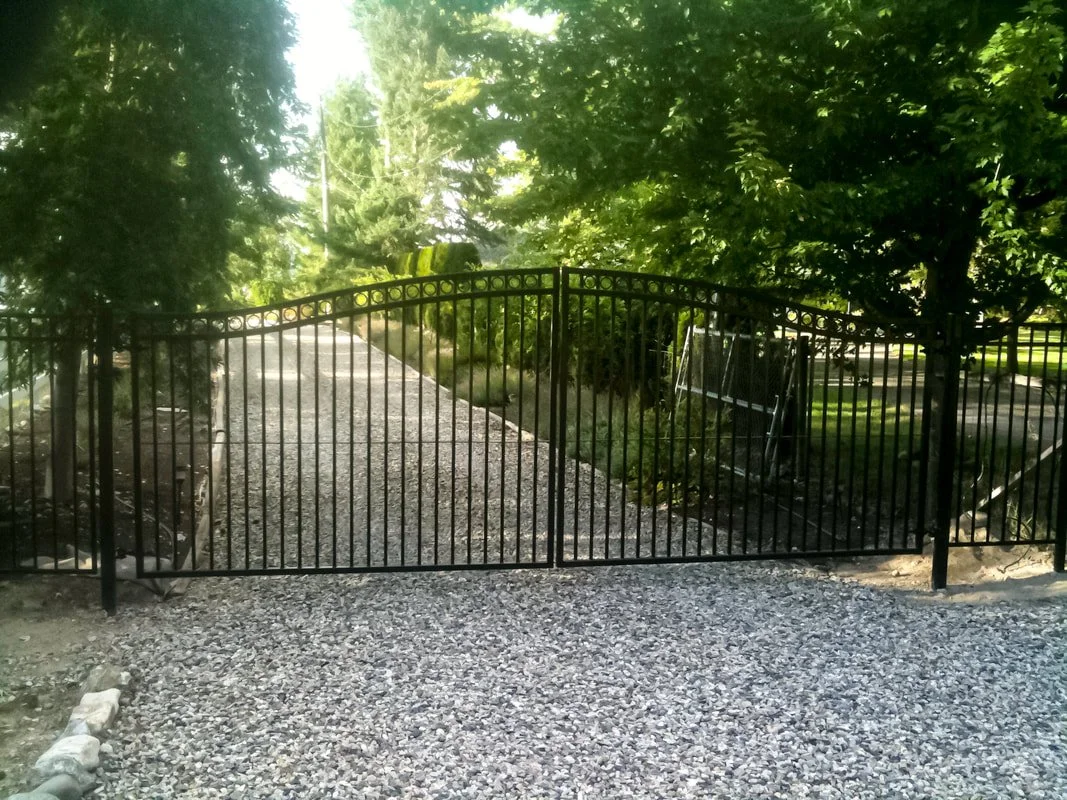
Material Choice Affects the Post as Much as the Panel
We get asked a lot whether to go with steel or aluminum for a custom gate or fence. The answer depends on more than looks. Steel gives you strength and a heavier feel for larger gates and taller fence sections. It needs a proper coating, galvanizing, powder coat, or both, especially where the post meets the footing, because that's where moisture sits longest and corrosion starts first.
Aluminum won't rust the way bare or poorly coated steel will. It's a common choice for fence panels and railings that see a lot of ground contact or splash from snow and irrigation. The trade-off is aluminum isn't as rigid, so larger custom gates built from aluminum need heavier framing to stay square over time.
This is exactly the kind of decision that gets made before anything goes in the ground. It's another reason material choice and post timing need to happen in the same conversation, not two separate ones.
Concrete Doesn't Cure Right in the Cold Either
Even on the days you can still get a hole dug, there's a second clock running. Concrete needs to stay above a minimum temperature to cure properly. Pour a footing when the ground and air are already flirting with freezing and you risk the concrete never reaching full strength. That footing might look fine on install day and still fail early because the cure never finished right.
We watch the forecast as closely as we watch the ground. There's a window every fall where the soil is still open and the temperatures still support a proper pour. It's shorter than most people expect.

Saturated Ground Causes Its Own Problems
Before the freeze hits, Kelowna typically goes through a stretch of fall rain that saturates the soil. Wet, heavy ground makes footings harder to set correctly and can shift while the concrete is still curing if it isn't handled right. It's another reason we'd rather get a footing in on a dry October day than a soaked one in late November.
A Footing Problem Usually Gets Blamed on the Gate
When a gate goes out of square or a fence line starts leaning, the metal usually takes the blame. In most cases the real problem started below ground: a post set too shallow or set in ground that never had the chance to settle and cure properly before winter hit. Every freeze-thaw cycle after that makes it worse. Latches stop lining up. Hinges start carrying weight they were never built to carry.
None of that shows up on day one. It shows up the following fall, which is exactly why the footing gets as much attention from us as the fabrication does.
Get It Ordered While the Ground Still Cooperates
If you've been putting off a new gate, a fence line, or a set of custom railings, the next few weeks are the window to get it done right. That means getting your fabrication order in now so the panels are built and ready to install while the ground still allows it. Once it locks up, anything that needs a footing in the dirt is looking at spring.
Get Bent Metal Fabrication has built custom gates, fencing, stairs and railings, and metal work of every kind in Kelowna since 2008. That includes knowing how this ground behaves once the temperature drops and how to build a post, panel and footing that all hold up together. Contact us now to get your project scheduled before the snow flies.
